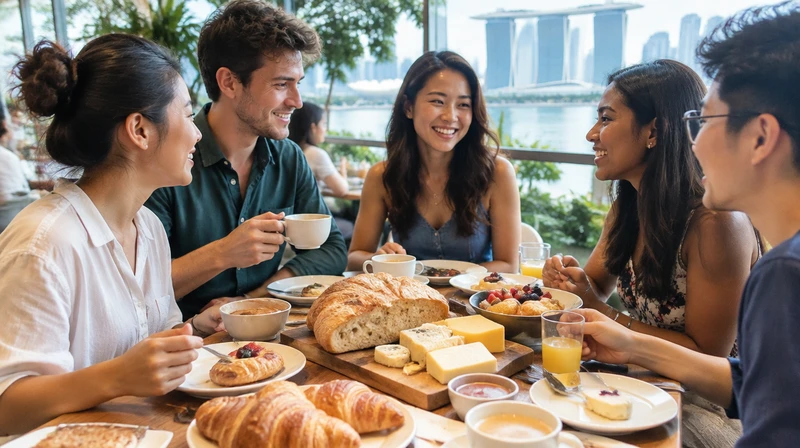
Europe is not one community, and in Singapore it shows. French bakers, German butchers, Italian cheesemongers, British tea drinkers and Swiss club members all call the island home, each with their own favourites. Add the Eurasian community, whose roots here go back more than two centuries, and you get a rich European thread running through Singapore's story.
Welcome to the final part of Many Faces of Singapore, our series celebrating the communities beyond the Chinese, Malay and Indian groups that make this island richer. This guide is for Europeans settling in and for everyone curious about European flavours and heritage on our doorstep.
Catch up on the series:
Many Countries, One Welcoming Community
The Ministry of Foreign Affairs says Singapore has good relations with countries across Europe, hosts a large European community and has well-represented European cultural institutions. It also cites more than 14,000 European companies here, many using Singapore as a regional base. Note that the MFA page's visit highlights stop in early 2019, so we use it for background only.
For newcomers, that means plenty of familiar faces: national clubs, schools, cultural institutes and neighbourhood hangouts. It also means Singapore residents of every background can enjoy European food and festivals without leaving the island.
A tip for new arrivals: ask your embassy or national club about community events and welcome sessions. They are a great way to meet people, and they often welcome guests of all backgrounds.
Delis, Butchers and Groceries for a Taste of Home
Credit: InSingapura.com (AI-assisted)
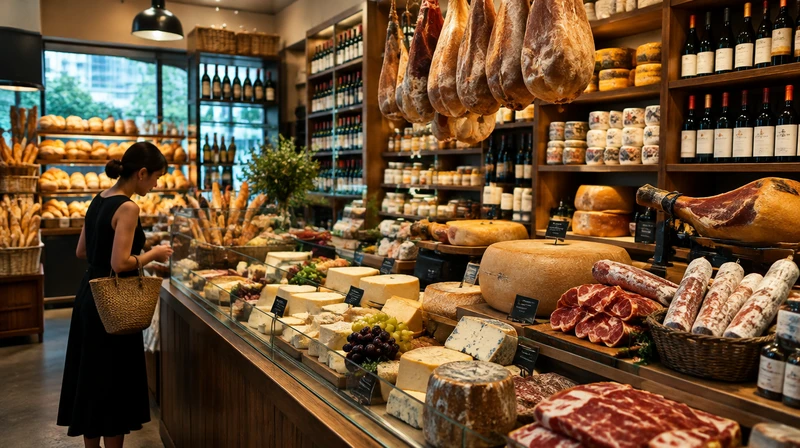
Here are some options from Honeycombers (updated September 2025) and The Singapore Women's Weekly (November 2023):
- German Market Place: German groceries, plus Swiss and Austrian items, at 609 Bukit Timah Road, and online.
- LPB Market: artisanal European cheeses, charcuterie, wines and meats at FairPrice Finest Clarke Quay, and online.
- Le Petit Depot and The French Grocer: online shops for French products, with some Italian items at The French Grocer.
- British Corner Shop: online store delivering British favourites such as tea and crisps.
- The Cheese Ark, Stirling Road: cheeses from small European family farms.
- Fave Fine Food, Phoenix Park: French butter, Italian truffles and Spanish ham.
- Huber's Butchery, Dempsey Road: meats and house-made sausages in German style.
Delivery areas, prices and store hours change, so please check each shop's website before you order or visit. Some products may contain pork or alcohol, so read labels carefully if you have dietary needs.
Meet the Eurasians: Europe Meets Asia in Singapore
Credit: InSingapura.com (AI-assisted)
One of Singapore's oldest links with Europe is its Eurasian community. NLB's Infopedia describes Eurasians as people of mixed European and Asian lineage, most often with Portuguese, Dutch or British forebears, and notes that about 17,000 Eurasians lived in Singapore in 2012. The community has been here since the early 19th century. The Eurasian Association, founded in 1919, is its main representative body.
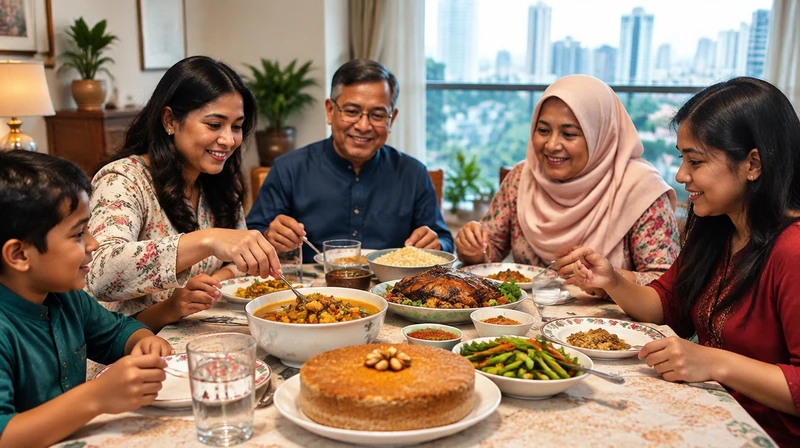
Their food is a highlight. According to the National Heritage Board's Roots.gov.sg, which lists Eurasian cuisine in Singapore's Intangible Cultural Heritage inventory (added April 2018), dishes blend European and Asian influences:
Debal (devil's curry): a spicy curry made with leftover roast and spice paste, traditionally eaten on Boxing Day.
Sugee cake: a rich semolina, butter and almond cake served at festive occasions.
Pang susee: a meat-filled potato or sweet potato bun eaten during Lent.
Kueh kochi: a sweet dessert of glutinous rice flour, coconut and palm sugar, made at Easter.
Roots.gov.sg notes recipes are passed down orally, and each family has its own version, so no two tables taste the same. Eurasian dishes are often made at home and in family-run restaurants.
Visit the Eurasian Heritage Gallery
Credit: InSingapura.com (AI-assisted)
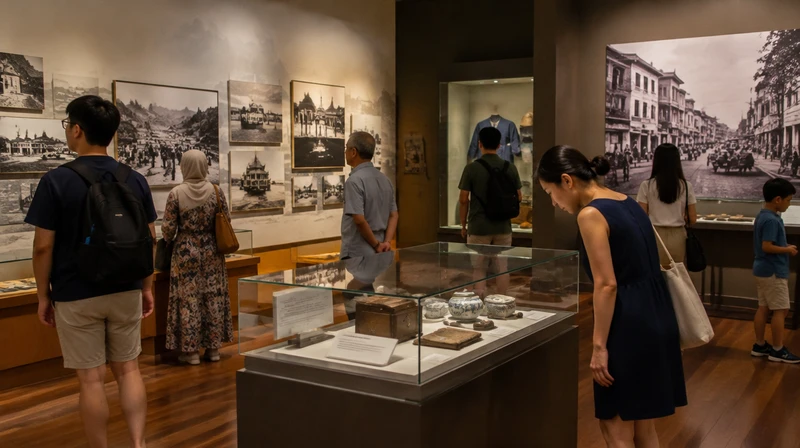
To go deeper, visit the Eurasian Heritage Gallery at the Eurasian Community House, 139 Ceylon Road. According to Roots.gov.sg, it has three galleries covering the community's origins, contributions to nation-building, and culture and lifestyle, with over 130 artefacts, 400 images and 10 multimedia displays. At its launch in September 2019, the Istana noted that over 300 people contributed artefacts and about two-thirds of the docents who lead guided tours are Eurasian.
TTG Asia reported that tours and tasting sessions can be arranged for groups. Neither source lists opening hours or admission fees, so contact the Eurasian Association on 6447 1578 or visit its website before you go.
Festivals, Community Events and Thank You for Reading
European festivals and community events happen throughout the year. For example, the People's Association listed a Tanglin Community Club Oktoberfest on 3 October 2026, described as a celebration of German culture, and CityNomads' roundup showed several other German-themed events in September and October. Those have passed, but many clubs and community centres repeat events annually, so check OnePA and your national club's calendar. Eurasian families also celebrate Christmas and Easter with festive foods, which makes December a lovely time to try them.
That wraps up Many Faces of Singapore. From the Filipino and Indonesian communities to the Japanese, Korean, Thai and European ones, we hope this series has given you a few new places to eat, shop and explore, and a few new neighbours to say hello to.
Read the series from the start: