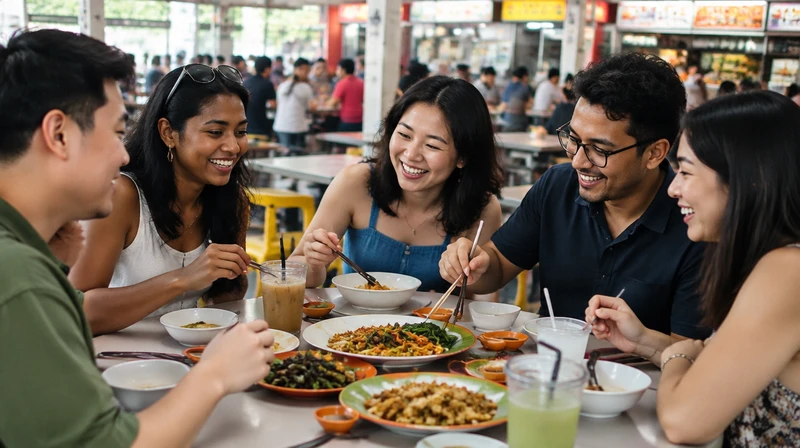
Walk through any MRT station, hawker centre or mall on a weekend and you will hear more than English, Mandarin, Malay and Tamil. You will hear Tagalog, Bahasa Indonesia, Japanese, Korean, Thai, Vietnamese and many more. Singapore has always been a place where people arrive, settle, work and share what they love, and that includes food, festivals and favourite shops.
Welcome to Many Faces of Singapore, a new series from InSingapura.com. In this first article we look at the wider picture of who lives and works here. In the next articles we will visit one community at a time, with ideas for where anyone can enjoy their food and shops. Everyone is welcome, and we hope this makes it easier to be curious and kind.
Who lives and works in Singapore?
Credit: InSingapura.com (AI-assisted)
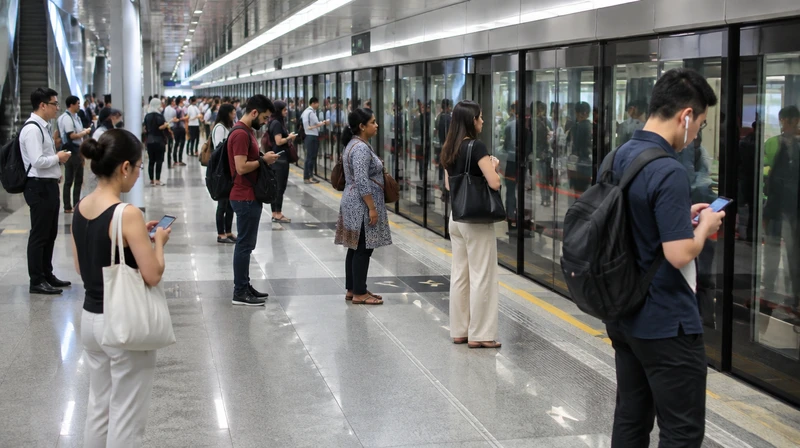
According to the Strategy Group's Population in Brief 2025, Singapore had about 6.11 million people in June 2025. About 4.20 million were residents (3.66 million citizens and 0.54 million permanent residents). Another 1.91 million were non-residents, including work pass holders and their dependants, students and migrant domestic workers.
Singapore's official ethnic categories are Chinese, Malay, Indian and Others, often shortened to CMIO. In the 2020 Census, residents were 74.3% Chinese, 13.5% Malay, 9.0% Indian and 3.2% Others. The "Others" group covers many communities, such as Eurasians and people of other backgrounds. Because the census counts residents only, it does not capture everyone who lives and works here.
Why this series, and who we will meet
Singapore has many communities, and no short list could do them all justice. We are starting with five whose food, shops and festivals are easy to find and enjoy in everyday Singapore, and we finish with a guide for Europeans and anyone who loves European flavours and Eurasian heritage. This is not a ranking and it is not complete. We may add more later, including Burmese, Nepali, Sri Lankan and Vietnamese communities, so tell us who you would like to read about.
Filipino: from adobo to ube desserts, with a long-standing community hub at Lucky Plaza.
Indonesian: flavours from across the archipelago, loved by many Singaporeans too.
Japanese: ramen, supermarkets, department stores and a long Singapore story.
Korean: barbecue in Tanjong Pagar, groceries and K-culture finds.
Thai: noodles, curries and groceries, plus a temple with a Singaporean twist.
European: delis and groceries, plus the Eurasian community's food and heritage.
These guides are for everyone. They are not a map of where any community "belongs" or "should" go. People of every background live, shop and eat all over Singapore.
Places that feel like home
Credit: InSingapura.com (AI-assisted)
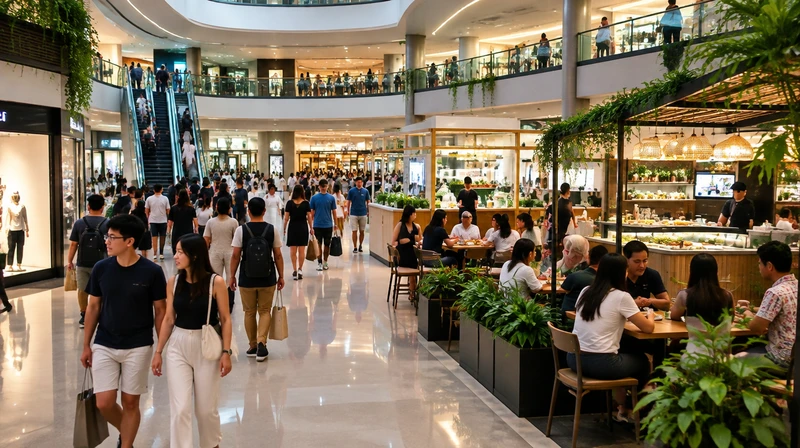
Some buildings have become well-loved gathering places over the years:
Lucky Plaza opened in 1981 and, as RICE Media describes, grew into a social hub for the Filipino community, with remittance agencies, restaurants, groceries and salons.
Peninsula Plaza, nicknamed "Little Myanmar" since the 1990s, has Burmese restaurants, snack shops and tailors, according to Roots.gov.sg and TheSmartLocal.
Golden Mile Complex was long known as "Little Thailand". Its tenants left by May 2023 ahead of redevelopment, and Thai businesses such as Thai Supermarket have moved nearby. Our Thai guide shows where to find them today.
A Harvard Mellon Urbanism project that studied several of these places noted that informal gathering spots like these can change quickly when rents or buildings change. If your favourite spot has moved, a quick search or a call ahead will save you a trip.
Being a good neighbour
Credit: InSingapura.com (AI-assisted)
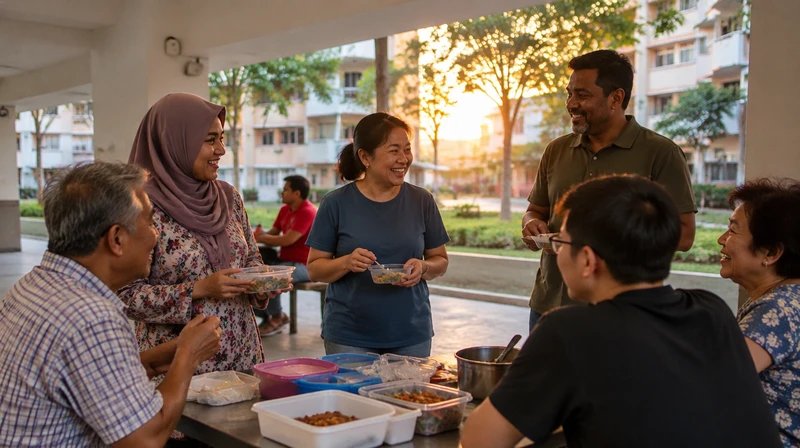
Racial Harmony Day, observed on 21 July since it was launched in schools in 1997, reminds us to understand and respect each other. Here are a few everyday ways to do that:
Ask, don't assume. Not everyone with the same accent or background shares the same story.
Try new food with curiosity, and ask the owner what they recommend.
Support small family-run shops, and be patient if someone is still learning English.
Learn a few greetings. "Salamat", "terima kasih", "arigato", "gamsahamnida" and "khob khun" go a long way.
Be mindful of dietary needs. Some dishes may contain pork, beef or alcohol, so check with the vendor if it matters to you.
Read the whole series, in order:
Part 2, Filipino:
Part 3, Indonesian:
Part 4, Japanese:
Part 5, Korean:
Part 6, Thai:
Part 7, European:


