From stress balls to bun-shaped toys that slowly rise, squishies are back, thanks in large part to social media. If your child (or you) has been asking for one, here is a simple guide to the types, where to buy, and what we know about safety.
What are the main types?
According to HoneyKids' parent guide, squishy toys generally fall into these groups:
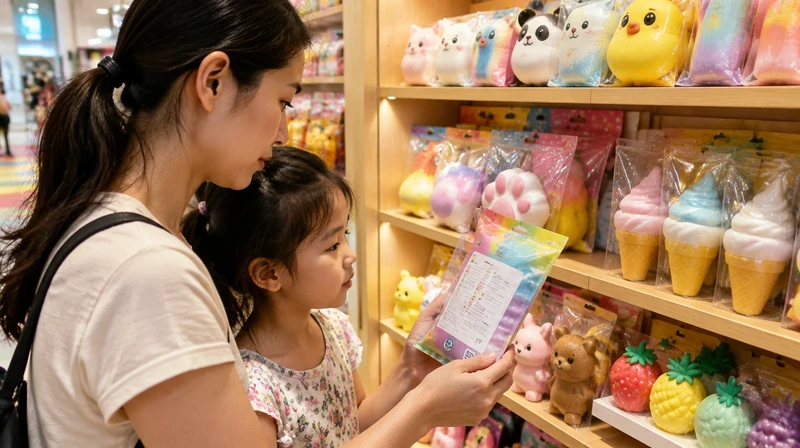
- Slow-rise foam squishies: foam toys that slowly spring back after being squeezed, often shaped like food
- Filled stress balls: stretchy outer skins filled with gel, dough-like material, beads or sand. NeeDoh is one well-known brand
- Mochi squishies: small, soft rubbery toys, often shaped like animals
- Mesh or bubble balls: filled balls that push through a net when squeezed
- Plush squishies: soft stuffed toys such as Squishmallows, which are different from foam or gel-filled ones
- Popping or pimple toys: some come with syringes and are best avoided
CNA's Talking Point grouped the toys it tested into three broad kinds: filled with liquid or gel, slow-rising, and stretchy.
There are also DIY squishy kits. One example at Toys"R"Us Singapore is a squishy maker kit rated for ages 8 and above, listed at S$59.99 when we checked, with small parts and a "not for children under 3" choking warning.
Where can you buy them?
HoneyKids' 2026 guide lists physical and online sellers, including Toys"R"Us, department stores such as TANGS and Isetan, toy shops such as The Toy Folks, and independent squishy stores. CNA says squishies in Singapore cost from around S$2 to about S$30, and the Straits Times says official NeeDoh toys are priced at roughly S$9 to S$30. Stock and prices vary, so check with the seller. We have not visited these stores, and this is not an endorsement of any seller.
Are squishy toys safe? What CNA's lab test found
CNA's Talking Point (published 8 to 9 Nov 2026) sent 18 squishy toys, six from each of the three types, for lab testing for benzene and restricted phthalates. These were the chemicals behind overseas recalls and warnings.
No benzene was detected in any of the 18 toys.
Six of the 18 had restricted phthalates (DEHP, DBP and DINP). The DEHP and DBP levels were below Singapore's permissible limit of 1,000mg per kg.
DINP was found in two toys. One was at 1,726mg per kg, about 1.7 times the limit. The lab said this does not by itself show a child is at risk, as that depends on how the toy is used, for example if it is mouthed.
The retailer of that toy told CNA that it pulled the toy, quarantined the stock and is offering refunds.
The programme also ran a heat test. A bag of water left on a car dashboard for three hours on a 32°C day reached 60°C. When three toys were then kept at 60°C for three hours, they looked intact, but one burst and leaked when squeezed. The lesson is not to leave squishies in a hot car, and to let them cool before a child handles them.
What the regulator says
The Consumer Product Safety Office (CPSO) told the Straits Times that it is monitoring overseas developments, that there is no evidence of a widespread safety issue affecting squishy toys sold in Singapore so far, and that products in recent US recalls do not appear to have been distributed here. It said it will keep doing market surveillance and act on credible concerns. CPSO also has a page of squishy toy safety tips, last updated on 25 August 2026. We did not find a separate public statement from the Ministry of Health on squishy toys.
What is happening overseas
The Straits Times reports about 37,000 squishies recalled in the US in early October and nearly 20,000 illegal squishy toys seized in Thailand. The US Consumer Product Safety Commission has warned about fake and counterfeit squishies, and says heated toys can burst and cause burns. Australia's ACCC advises seeking medical advice promptly if contents are swallowed or inhaled, and not to heat, puncture or freeze squishy toys. Health Canada has received reports about squishy dumpling toys but says it has not confirmed a specific health or safety risk.
A simple checklist before you buy
- Buy from a reputable seller and be wary of unusually cheap listings.
- Check for a clear age label, importer details and safety instructions.
- Ask for safety certificates or lab reports. For NeeDoh, look for the anti-counterfeit label with a unique code, according to its distributor.
- Avoid toys sold with sharp needles or syringes.
- Be careful with food-shaped or scented squishies around children who bite or mouth things.
Safe use at home
Never heat, microwave or leave squishies in a hot car or in direct sun.
Stop using a toy that is torn, leaking, oily, sticky or has a strong chemical smell.
Wash hands after play, and keep toys out of mouths and away from toddlers.
If filling gets on skin or in eyes, rinse well. For burns, US regulators advise cool running water for at least 20 minutes. See a doctor if you are worried.
If you suspect a product is unsafe, you can contact the Consumer Product Safety Office through its website.
Squishies can be a fun, calming toy. Just choose carefully and check them regularly.