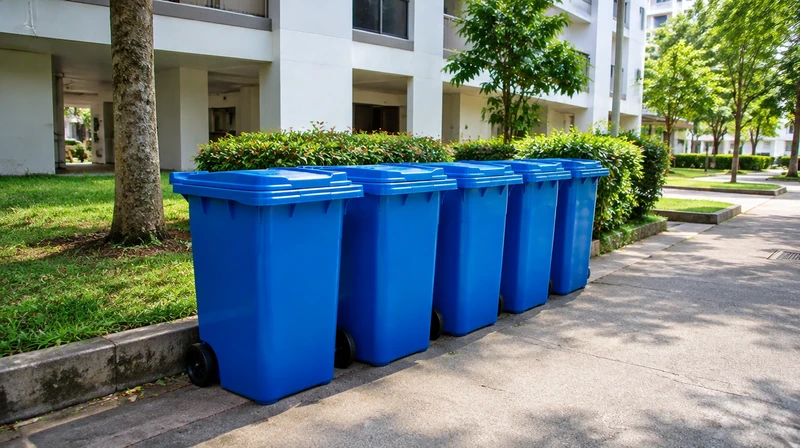
Most of us have stood at the blue bin wondering, "Can this go in or not?" Getting it right matters: a lot of what ends up in blue bins is contaminated and cannot be recycled. The good news is that the rules are simple once you know the three steps.
Check, Clean, Recycle
- Check if the item is recyclable. Paper, plastic, glass and metal usually are.
- Clean it. Rinse and dry anything that held food or liquid. If it cannot be cleaned, bin it as general waste.
- Recycle by putting it in the blue bin on your block.
You do not need to sort the items yourself, because they are sorted later at a materials recovery facility.
What can and cannot go in the blue bin
Credit: InSingapura.com (AI-assisted)
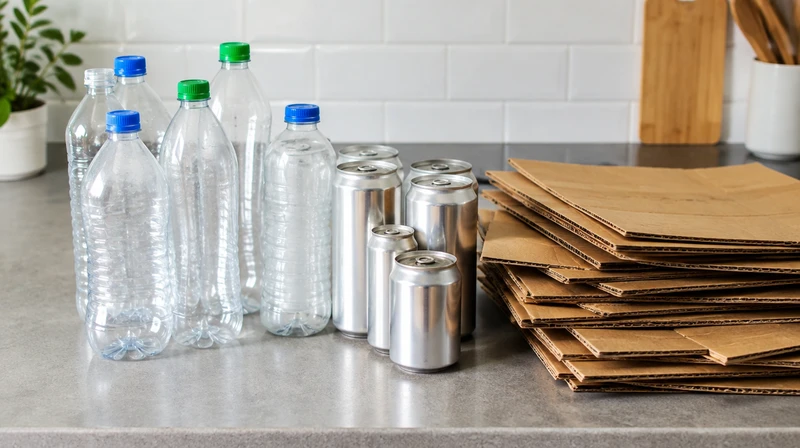
Can go in (clean and dry): recyclable paper, plastic, glass and metal.
Cannot go in: items with food or liquid, non-recyclable items, e-waste, and reusables such as clothes, shoes and soft toys. If clothes and toys are in good condition, donate them instead.
PropertyGuru adds that tissue paper, plastic cutlery, light bulbs and ceramics also contaminate the bin. The Eco-Business report notes the often-quoted 40% contamination figure and that Singapore's domestic recycling rate was 11% in 2024, so rinsing and checking first really does help.
Not sure about an item? You can chat with Bloobin on WhatsApp or Telegram, or use the Recycle Right Check my Item tool. HDB blocks each have one blue bin, and public waste collectors must clear recyclables up to three times a week. Since December 2025, five Town Councils have also offered dedicated paper and cardboard collection with public waste collectors. If a bin is overflowing, report it to your Town Council.
Batteries, gadgets and bulbs: where to take e-waste
Credit: InSingapura.com (AI-assisted)
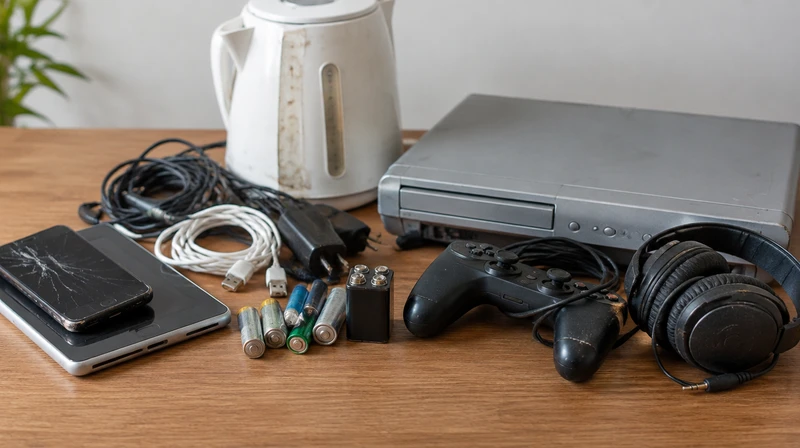
Do not put batteries or electronics in general bins or blue bins. NEA lists several options:
- E-waste bins at town centres, malls, government buildings, community centres and supermarkets (ALBA bins). Devices must fit the slot, for example 500mm x 250mm for the ALBA 3-in-1 bin.
- Retailer in-store collection, open to the public with or without a purchase.
- Free one-for-one takeback when a retailer delivers a new regulated product.
- Quarterly collection drives in residential areas, and doorstep collection (fees apply, see ALBA's website or app).
- Depot drop-off at 20 Tuas Loop, Singapore 637350.
- Small appliances such as rice cookers and microwaves go to Metalo, KGS or Virogreen bins, and KGS TakeBag lets you post e-waste via a PICK! locker.
For batteries, tape the ends of rechargeable ones and seal leaking ones in a leak-proof bag. ALBA bins accept AA, AAA, C, D, 9-volt and button cells, and bulbs up to 100mm in circumference. Long or circular tubes go through collection drives or doorstep collection. Telco programmes from StarHub, Singtel and M1 also accept some gadgets, per PropertyGuru, so check their sites for bin locations.