Phishing is trending again, so here is a calm, practical guide you can share with family and friends. No panic needed. A few habits will stop most of these messages in their tracks.
What phishing looks like right now
Phishing means a message tricks you into giving away card details, banking logins or one-time passwords (OTPs). The Singapore Police Force has issued several advisories this year, and the patterns are similar:
- Courier messages. A text, email or iMessage says your parcel cannot be delivered because of an "invalid" address, and asks for a small "re-delivery fee". In a July 2026 advisory, police said the fee asked for was only about S$0.06 to S$1.64, which is meant to make it feel harmless.
- Bank or shopping alerts. A September 2026 advisory described iMessages claiming to be from DBS or Shopee about a "pending transaction", with a phone number to call. The person on the line then asks for card details and OTPs.
- "Government" messages. Police have also warned about messages pretending to be from government agencies, including the police.
Police said that since June 2026, Cyber Command had detected and disrupted more than 30,000 iMessage accounts linked to this campaign. Estimated losses from courier-impersonation messages were about S$2.2 million as of 20 August 2026. Those numbers are from that advisory, so check police.gov.sg for the latest.
Seven red flags to check
- An unexpected message with a deadline. "Update within 24 hours" is a classic pressure tactic.
- A link you did not ask for. GovTech notes that official SMSes from banks and SingPost no longer contain clickable links.
- A foreign or odd sender. Police have seen +212, +63 and +44 numbers, or random-looking email addresses.
- "Reply Y" or "reply 1" to open the link. Police have flagged this as a way to get around iMessage's protection against links from unknown senders.
- A lookalike web address. Official government sites use gov.sg. CSA also advises checking for swapped letters, such as "paypa1" instead of "paypal".
- A request for OTPs, passwords or card details. Banks and legitimate services do not ask for these over an unsolicited call or message.
- An app download from outside the official app stores.
Set up your phone in five minutes
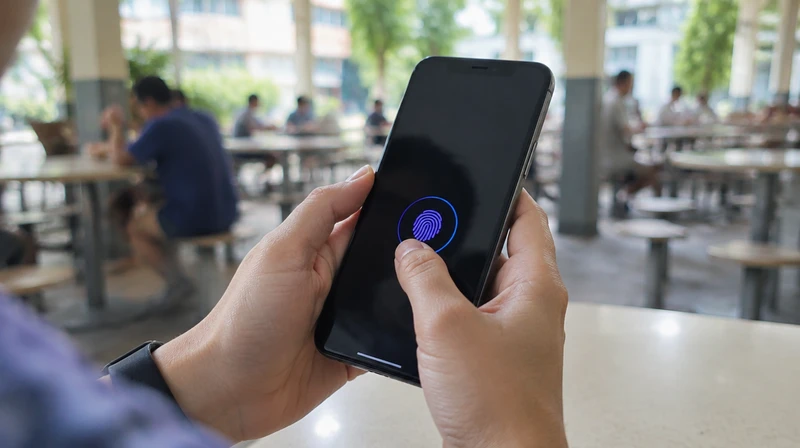
On iPhone, turn on "Filter Unknown Senders" and "Filter Spam" in Messages settings, and report suspicious messages in the app.
Install the ScamShield app (scamshield.gov.sg) to filter scam calls and SMSes.
Turn on two-factor authentication for banking, and set transaction limits for internet banking, including PayNow.
Use a different password for every account.
Consider a Singpass passkey. It is tied to the real Singpass login page, so it will not work on a fake site. It started on iPhone on 1 July 2026 and has since reached Android; GovTech describes it as an optional beta alongside existing login methods. Our earlier piece explains more:
If you already clicked or shared details
Do not beat yourself up. Move quickly instead.
- An unexpected message with a deadline. "Update within 24 hours" is a classic pressure tactic.
- A link you did not ask for. GovTech notes that official SMSes from banks and SingPost no longer contain clickable links.
- A foreign or odd sender. Police have seen +212, +63 and +44 numbers, or random-looking email addresses.
- "Reply Y" or "reply 1" to open the link. Police have flagged this as a way to get around iMessage's protection against links from unknown senders.
- A lookalike web address. Official government sites use gov.sg. CSA also advises checking for swapped letters, such as "paypa1" instead of "paypal".
- A request for OTPs, passwords or card details. Banks and legitimate services do not ask for these over an unsolicited call or message.
- An app download from outside the official app stores.
Not sure? Ask first
If a message feels off, do not click and do not call the number in it. Open your bank or courier's official app, or type their website yourself. You can also check the message on the ScamShield app or website, or call the 24/7 ScamShield Helpline at 1799.
Do share this with parents and grandparents. A two-minute chat can save a lot of trouble.