"Minimum wage" is one of the things people in Singapore search for a lot. The short answer: Singapore does not have one statutory minimum wage that applies to every job. Instead, it uses a few different tools that work together. It can be confusing, so this guide explains each one in plain English, based on pages from MOM, CPF and the Ministry of Finance, plus news coverage.
We stick to the facts here: what each scheme is, who it covers, and where to check your own situation. Wage guidelines also kick in on 1 December 2026, so the timing is useful to know.
Looking for other money matters this season? See
This is general information, not legal or financial advice. For your own pay, check with your employer, union or MOM.
The Progressive Wage Model: wage and training ladders by sector
Credit: InSingapura.com (AI-assisted)
According to MOM, the Progressive Wage Model (PWM) aims to raise wages through skills upgrading and productivity improvements, and it was developed by tripartite committees of unions, employers and the government.
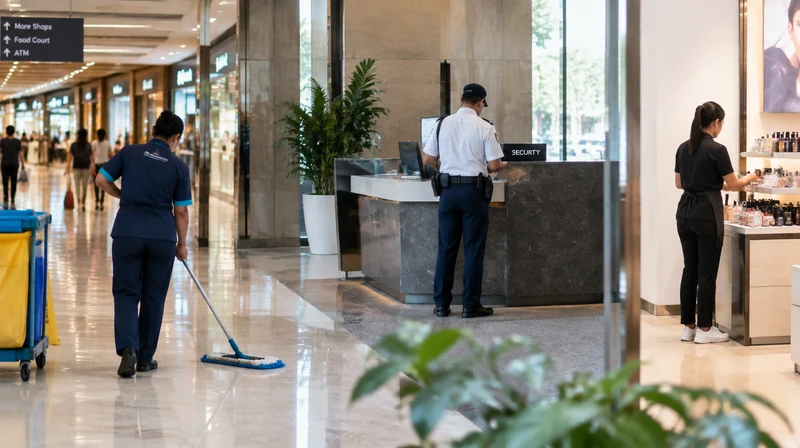
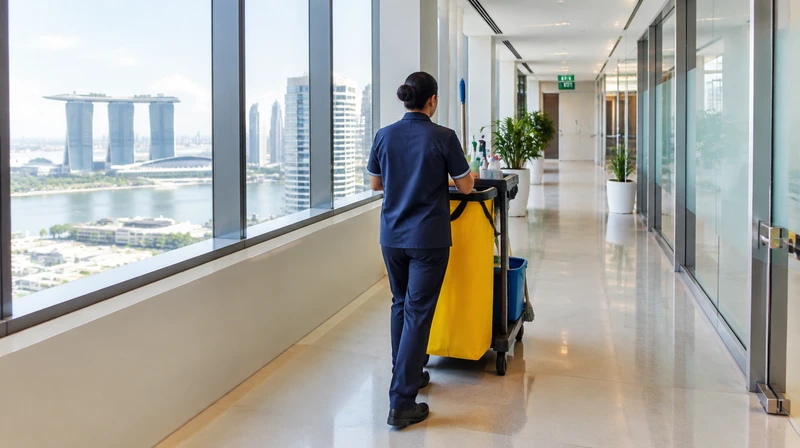
It covers cleaning, security, landscape, lift and escalator, retail, food services and waste management, plus occupational progressive wages for administrators and drivers. In-house cleaners, security officers and landscape workers are covered too. Employers must pay eligible workers at least the PWM wage for their job level and meet the training requirements.
MOM presents the PWM as wage and training requirements that apply through things like licensing conditions and work pass renewal rules, rather than as a general legal minimum wage. If you work in a covered sector, you can use the Progressive Wage Portal to check whether your pay is correct. For disputes, you can approach your union or email MOM's labour relations department.
The Local Qualifying Salary: a pay floor for other local workers

Credit: InSingapura.com (AI-assisted)
What about jobs outside the PWM sectors? That is where the Local Qualifying Salary (LQS) comes in. MOM says firms that hire foreign workers on Work Permits, S Passes or Employment Passes must pay PWM wages to covered local employees and meet the LQS for their other local employees. Firms that do not comply cannot apply for new work passes or renew existing ones.
MOM's LQS page lists the amount as $1,800 a month for full-time locals, raised from $1,600 to keep pace with wage growth. Locals working under 35 hours a week must receive at least $10.50 an hour gross. The LQS also affects how many foreign workers a firm can hire: a Singaporean or PR earning at least $1,800 counts as one local worker, and one earning $900 to under $1,800 counts as half.
So the LQS applies only where an employer hires foreign workers. A lower-wage worker at a small business outside the covered sectors and without foreign staff may not be covered by either scheme.
Workfare: top-ups for lower-wage Singapore Citizens
Credit: InSingapura.com (AI-assisted)
Workfare is different: instead of setting what an employer pays, it tops up the worker's income and CPF savings. This is for Singapore Citizens only.
Under the Workfare Income Supplement (WIS), CPF Board says you qualify if you are a Singapore Citizen aged at least 30 by 31 December of the work year (or a person with disabilities of any age) and your monthly income is between $500 and $3,000, with a 12-month average not above $3,000. There are also property and household conditions, including that your home's annual value is $21,000 or below and that you own no more than one property.
MOM says eligible employees and platform workers receive WIS automatically every month, in cash and CPF, and no application is described. Self-employed persons are paid annually and must have declared their income and made the required MediSave contributions. You can check your own status on CPF's e-services with Singpass.
Workfare Skills Support helps with training: MOM says you must be a citizen aged at least 30 with income not above $3,000 over the past 12 months, among other criteria. WSS (Level-Up) applications opened from 9 February 2026 for training from 1 March 2026. For questions, MOM lists the WIS hotline as 1800 227 1188.
NWC 2026/27 guidelines: what changes from 1 December

Credit: InSingapura.com (AI-assisted)
The National Wages Council (NWC) guidelines for 2026/27 cover 1 December 2026 to 30 November 2027, and the Government accepted them on 19 October 2026, according to MOM. For lower-wage workers earning up to $2,800 gross a month, the recommendation depends on how the employer is doing, as reported by Mothership and HCA Magazine:
- Done well with positive prospects: the higher end of 6% to 8%, or at least $135 to $170, whichever is higher.
- Done well with uncertain prospects: around the middle of 6% to 8%, or at least $135 to $170.
- Not done well but profitable: the lower end of 6% to 8%, or at least $120.
- Unprofitable (a new category): at least $120.
These are recommendations, not law, and employers can adjust them for business performance. Firms in PWM sectors must still meet PWM requirements regardless of profits. The Government has extended the Progressive Wage Credit Scheme to the end of 2028 to help employers with the cost. Mothership reports that slightly more than a quarter of employers met last year's recommendations, though more than 60% of those that fell short still gave raises.
Employers can also see MOM's full guidelines on its website. Workers should check with their employer or union about how this applies to their job.
Not sure which one applies to you? Where to check

Credit: InSingapura.com (AI-assisted)
A quick way to work out where you stand:
- Check your job: if you work in cleaning, security, landscape, lift and escalator, retail, food services, waste management, or as an administrator or driver, PWM wages may apply. Use MOM's Progressive Wage Portal to check.
- Otherwise, ask whether your employer hires foreign workers: if so, the LQS applies to local employees.
- If you are a Singapore Citizen aged 30 or above earning $500 to $3,000 a month, check your WIS status on CPF's e-services with Singpass.
- Look out for the NWC 2026/27 guidelines in your December pay discussions, remembering that they are recommendations.
Unsure about your pay? Talk to your union, or contact MOM. Be wary of messages asking for your Singpass or banking details to "claim" any scheme: Workfare is paid automatically, and real agencies will not ask you to transfer money.