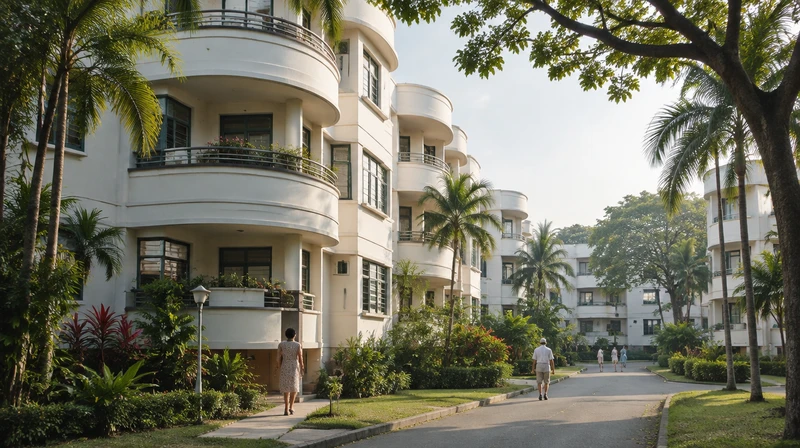
Tiong Bahru is one of those neighbourhoods that rewards slow walking. Streamline Moderne flats with curved balconies sit beside a busy wet market, a hawker centre, indie bookshops and bakeries, all within a few quiet streets.
It is also an important piece of history. According to NLB, it was Singapore's first public housing estate, built by the Singapore Improvement Trust (SIT), the predecessor of the Housing and Development Board.
This guide offers a relaxed morning route, with the history behind the buildings, where to eat and a few tips so you can enjoy it without the crowds.
A Short History of Tiong Bahru
The name Tiong Bahru combines the Chinese word tiong, meaning cemetery, with the Malay bahru, meaning new, referring to a cemetery established near today's Singapore General Hospital, according to NLB.
In the 1930s, the Singapore Improvement Trust cleared the swampy, hilly land and built the estate. Construction began in 1936, and by 1941 it had 784 flats, 54 tenements and 33 shops, housing about 6,000 people. NHB's Roots.gov.sg notes that 138 SIT blocks still stand today in Singapore.
In 2003, URA conserved 20 blocks of pre-war flats. The National Archives of Singapore adds that the estate is believed to be the only complete and undamaged pre-war public housing structure in Southeast Asia.
What Makes the Flats Special
The pre-war blocks, designed by SIT architects, use a modified Streamline Moderne style, a late form of Art Deco. Look for:
- Curved corners and sweeping lines, which led locals to call them aeroplane houses, because they resembled the control tower of Kallang Airport.
- Open balconies, high ceilings and large windows suited to the tropical climate.
- Spiral staircases and walkways in the post-war blocks, set among greenery.
- Block 78 Moh Guan Terrace, built in 1940 as the first public housing block with an air raid shelter. Guides note that the shelter is not open to the public, but information boards stand outside.
Please remember that these are real homes. Walk quietly, keep to public paths and ask before photographing residents.
Start at Tiong Bahru Market
Credit: InSingapura.com (AI-assisted)
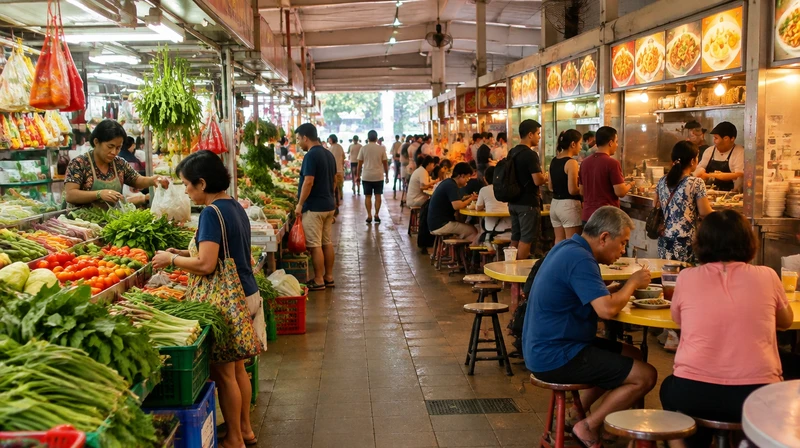
NHB's Tiong Bahru Heritage Trail starts at Tiong Bahru Market, which NEA lists at 30 Seng Poh Road. The market opened in 1951 and was redeveloped from 2004 to 2006.
The ground floor is a wet market, and the hawker centre upstairs serves dishes such as chwee kueh, Hokkien mee and lor mee. Ultifresh suggests going between 8.30 and 10am to avoid the lunch crowd. Bring cash, clear your tray when you are done, and note that one guide reports the hawker centre opening from 7am, though stall hours vary.
A Gentle Walking Route
NHB's heritage trail and Ostrich Trails suggest a route like this. Neither gives a total distance, so plan on a relaxed couple of hours.
- Tiong Bahru Market (start).
- Bird Corner, at the Seng Poh Road and Tiong Bahru Road junction, a former gathering spot for bird owners.
- The Architecture of Tiong Bahru, around Eng Watt Street, Sit Wah Road and Tiong Poh Road.
- Monkey God Temple at 44 Eng Hoon Street, a Taoist shophouse temple. It is a place of worship, so dress modestly and be respectful.
- Seng Poh Garden and its 1972 sculpture by Lim Nang Seng, seen by some as a dancing girl and by others as a swan.
- Tiong Bahru Community Centre at 67A Eu Chin Street.
The trail also includes the graves of pioneer Tan Tock Seng and his family, which descendants still tend.
Murals, Bakeries and Indie Shops
Credit: InSingapura.com (AI-assisted)
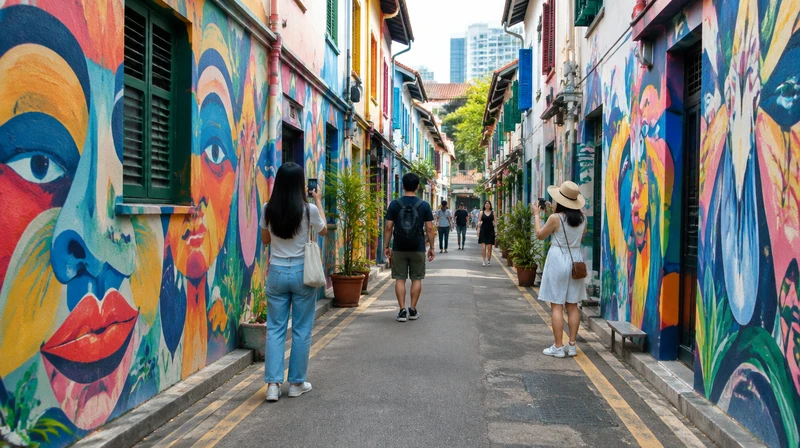
Tiong Bahru is also known for its street art. Guides mention Yip Yew Chong's nostalgic works, such as Pasar and the Fortune Teller and Home, and goat murals by Ernest Goh near the market. Murals can be repainted, so some may have changed.
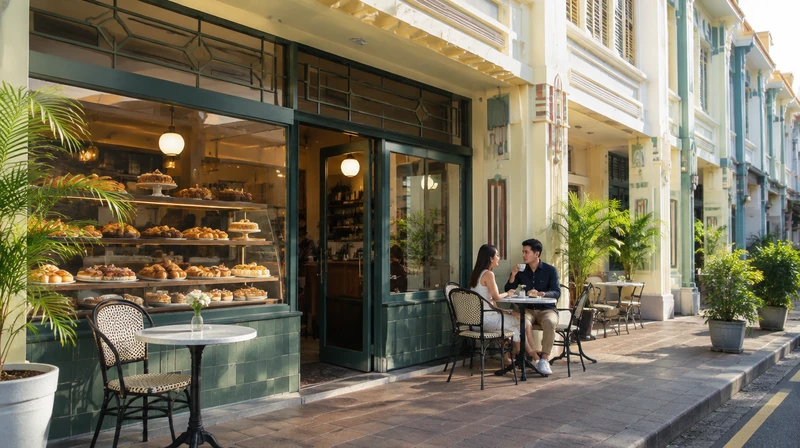
After the walk, you can browse the neighbourhood's bakeries and independent shops. Time Out lists Tiong Bahru Bakery, Plain Vanilla Bakery, Tiann's Bakery, Ronggeng Records and The French Bookshop, among others. Ostrich Trails lists Tiong Bahru Bakery's opening hours as 7.30am to 8pm and Tan Boon Liat Building as 11am to 7pm, but hours change, so check before you go.
With Children: Tiong Bahru Park
Credit: InSingapura.com (AI-assisted)
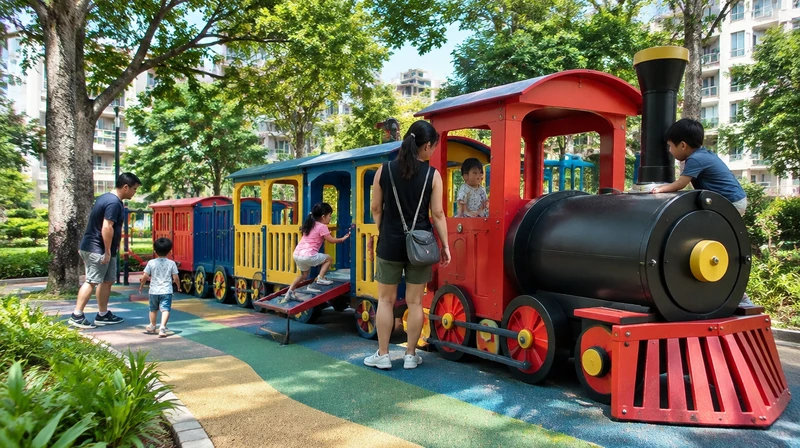
Nearby, Tiong Bahru Park is a 3.3-hectare park along Tiong Bahru Road and Lower Delta Road, open around the clock. NParks says it is wheelchair accessible and about a five-minute walk from Tiong Bahru MRT. Its centrepiece is a life-sized tilting train playground, where children can climb through the tilted carriages and slide out.
It makes a nice finish to a morning of walking and snacking.
Getting There and Tips
The nearest station is Tiong Bahru MRT (EW17) on the East West Line, and several bus routes serve the area. Ostrich Trails recommends Exit A.
Go on a weekday morning. The market is busiest on weekend mornings.
Bring cash for hawker stalls and small shops.
Some shops close on Mondays.
Wear comfortable shoes, and walk early or late to avoid the heat.
Keep noise low near the flats, as people live there.
Tiong Bahru is a good reminder that Singapore's heritage can still be lived in, eaten in and enjoyed on foot.